
Motivation mojo
Reframing motivation
Does your motivation often feel like it’s running on empty? Or maybe you have a full tank one day, and an empty one the next? Motivation isn’t something you have. It’s something you build. Motivation isn’t a personality trait. It’s a feedback loop.
The Motivational Cycle
- Need is the gap between where you are now and where you want to be. It’s what creates the desire for change.
- Drive is the internal push that gets you to take action.
- Incentives and goals reinforce behavior.
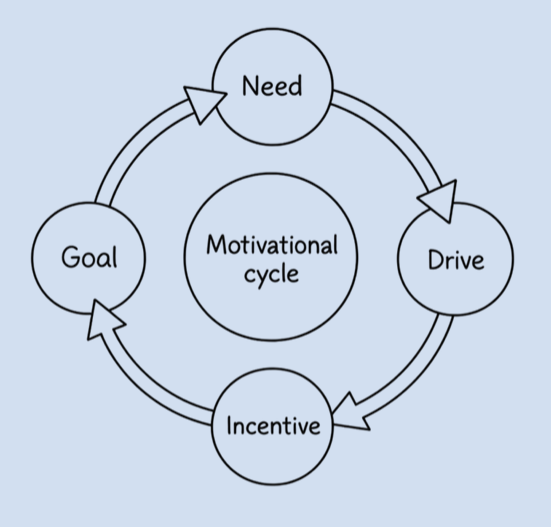
The Motivational Cycle: Need (why it matters)
- People often skip this step or keep it too vague. Specific and personal needs strengthen motivation.
- Get specific about the gap. Ask:
- “What’s not working right now?”
- “What would ‘better’ actually look like?”
- Example: Instead of “I want to eat healthier” try “I want more energy in the afternoon.”
- Personalize the why: “Why does this matter to me, specifically?”
- Go 2 to 3 layers deep: “I want to eat healthier” → “so I feel more energetic” → “so I have stamina to play with my kids after work”
- Focus on intrinsic instead of extrinsic motivators - they will support long-term motivation
- Identify friction points. Where is the struggle happening?
- Time
- Energy
- Environment
- Social influences
- Decision fatigue
- Emotional triggers
- The better you understand your friction points, the more likely it is you will develop a plan that honors your needs and reality.
The Motivational Cycle: Drive (the engine of action)
- Drive is not constant. It will ebb and flow in response to friction points. This is normal.
- Make starting easier, not harder. Think about your friction points. Start small and build from there.
- Use pre-cut veggies
- Try one new recipe for the week
- Replace one lunch eaten out with one brought from home
- Focus on process, not outcomes. Action creates motivation, so set goals that focus on the process, not a final outcome.
- Instead of “I will lose 5 pounds this month” try “I will include a vegetable with my dinner three times per week”
- Frame goals as something to be gained, instead of avoided.
- Instead of “I will avoid eating dessert at night” try “I will see if eating fruit at night satisfies my sweet tooth”
- Reduce decision fatigue. Every decision you make “leaks” drive; defaults and automatic processes preserve drive.
- Same breakfast options on weekdays
- Go-to grocery list
- Rotating weekly menus
- Focus on waypower instead of willpower. Instead of saying “I will just do it” ask yourself “How will I do it?”
- Waypower is your road map or plan of action. It includes the specific, actionable steps you will take.
- Waypower may also include the tools, resources and strategies you need to move forward.
- It is powered by mental flexibility and a willingness to change course when things aren’t working.
The Motivational Cycle: Incentives and goals (what keeps you going)
- Identify immediate rewards. Even if you are working towards longerterm goals, here-and-now rewards fuel motivation.
- Listen to a favorite podcast only while cooking or meal prepping
- Check off a tracker to “see” your progress
- Calculate the money you saved that week by eating out less
- Focus on progress, not perfection. Perfectionist and all-or-nothing thinking are sure fire ways to kill motivation.
- Challenge yourself to change how you set goals and define progress
- Celebrate all wins - big and small.
- Keep a journal of “wins” to remind you of how far you have come
- Remember, motivation is a feedback loop.
- Keep checking back in with your needs, drives, incentives and goals
- If they have changed, that is okay. It is not a sign of failure if you change course!