
Eat well, spend less
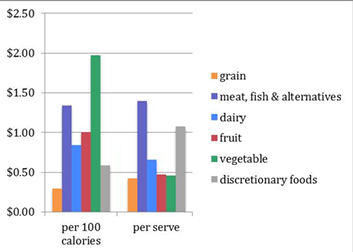
Does it really cost more to eat well?
It depends on how you compare foods:
- Price per calorie (discretionary foods cost less)
- Price per typical serving (non-discretionary foods cost same or less)
Money-saving tips for grocery shopping
Before you shop
- Do a quick clean-out of old or expired foods.
- Take inventory of what you already have on hand.
- Make a list of what you know you need.
- Plan for items to do double-duty.
- Shop alone, when possible (more people = more spending).
- Don't go hungry (or everything will look yummy!)
- Shop online to cut back on impulse purchases.
While you shop
- Opt for generic products whenever possible.
- Use unit prices to help you compare costs of similar products.
- Use a store savings card or app.
- Use coupons wisely (they aren’t always a deal).
- Buy in bulk with caution (it’s only a deal if you use all of it).
- Check expiration dates to ensure you can use it in time.
After you shop
- Store foods using the “first in, first out” method.
- Store foods properly to minimize spoilage.
- Repurpose leftover food.
- Prep foods to ensure they get used (e.g. cut and wash produce, shred cheese, make snack packs).
- Freeze almost-expired food.
- Track what you didn’t use so you buy smarter next time.
Money-saving tips by food group
Grains
- Buy plain oats and flavor yourself (skip the packets).
- Make your own baking mix (skip the boxed mixes).
- Pop popcorn in the microwave using a brown paper lunch bag (skip the ready-to-microwave bags).
Fruits and vegetables
- Only buy fresh produce you will use (skip the “aspirational produce”).
- Buy fresh produce in-season to minimize costs (and maximize taste).
- Buy whole produce instead of pre-cut.
- Buy larger bags instead of individual pieces.
- Supplement fresh produce with canned and frozen produce (look for minimal added sodium and sugar).
- Skip the microwave-in-bag frozen vegetables (they usually cost more).
Dairy and meat
- Try ultra-pasteurized milk, which has a longer shelf life (most organic and shelf-stable milks).
- Get more protein with Greek or Skyr yogurt.
- Buy larger containers of yogurt and cottage cheese instead of single cups.
- Stretch meat with beans, vegetables or grains.
- Try canned chicken, tuna or salmon.
- Buy meats on sale and freeze for later.
Fats
- Buy larger bottles of oil.
- Consider using a mix of more and less expensive oils, depending on the application.
- Make your own salad dressings using oil and vinegar.
- Stick with less expensive nuts and nut butters, such as peanuts and peanut butter.
- Use fat sparingly – a little goes a long way!