
The Power of a Mental Pause
Between stimulus and response
“Between stimulus and response, there is a space. In that space is our power to choose our response. In our response lies our growth and our freedom.”
— Viktor Frankl
What is a mental pause?
- An intentional moment to stop and bring your full awareness to the present moment.
- It gives your mind space to notice thoughts, emotions, and sensations instead of acting automatically.
How can it help with eating?
- Helps you distinguish between physical and emotional hunger.
- Allows you to meet true emotional needs without relying on food.
- Shifts your brain from the “hot” emotional system to the “cool” rational system.
- Reduces impulsive behavior by interrupting the trigger–response cycle.
- Improves your relationship with food by focusing on choices rooted in self-care.
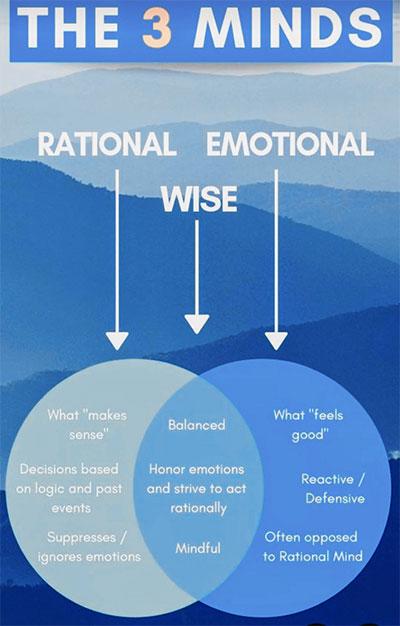
A mental pause and the wise mind
The S.T.O.P. method
- S — Stop
- T — Take a step back
- O — Observe
- P — Proceed mindfully
Stop
- Stop what you’re doing.
- Freeze. Don’t speak. Don’t move. Don’t act.
- This interrupts the automatic reaction.
Take a step back
- Physically remove yourself from the situation, if appropriate.
- Take a few deep breaths to calm your nervous system.
- Create space between impulse and action.
- Close your eyes briefly to focus inward.
- If others are involved, communicate your pause (e.g., “I need to think about this”).
Observe
- Tune into what’s happening without judgment.
- Notice physical sensations in your body.
- Notice your thoughts.
- Notice your emotions.
- You are not reacting yet—only observing to gather information.
Proceed mindfully
- Decide what action, if any, to take after slowing down.
- Tap into your wise mind.
- Ask: How can I balance emotion and reason?
- Align actions with your goals, values, and long-term well-being.
Other ways to take a pause
- Grounding techniques: Narrate your surroundings and name things you can see, hear, touch, and smell.
- Breathing techniques: Try box breathing—inhale for 4, hold for 4, exhale for 4, hold for 4, and repeat.
- Body scan: Slowly bring awareness from your toes to your head, relaxing tension as you go.
- Challenge thoughts: Ask whether a thought is a fact or just a feeling, and consider alternatives.
- Affirmations: Use positive self-talk such as “This feeling is temporary” or “I can handle this.”
Tips for practice
- Start with small, low-stress moments to build confidence.
- Create reminders, such as sticky notes or phone alerts.
- Practice mindfulness regularly to strengthen awareness and regulation.
- Use self-compassion and remind yourself that you are doing your best.