
Fiber fundamentals
Why focus on fiber?
- Dietary fiber has many health benefits, but most Americans don’t get enough (average intake is 15 grams per day).
- 90% of women and 97% of men fail to meet current dietary fiber recommendations.
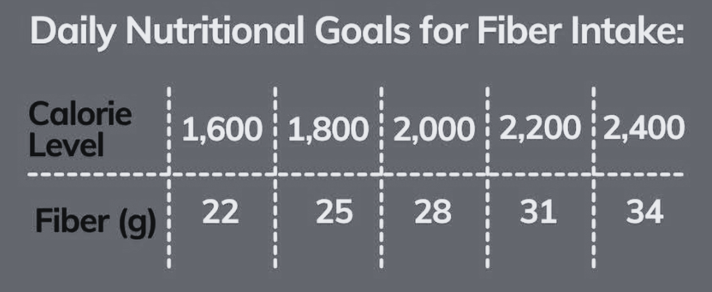
Recommendation: 14 grams per every 1,000 calories consumed
How to calculate: 0.014 X (your daily caloric intake) = grams of fiber needed per day
Health benefits of fiber
- Digestion: Improves digestion and nutrient absorption; improves regularity; keeps gut microbiome balanced
- Heart health: Lowers total and LDL cholesterol; reduces risk of heart disease and stroke
- Diabetes: Improves blood sugar control; lowers risk of diabetes
- Weight management: Promotes fullness, which may reduce calorie intake
- Cancer: Lowers risk of certain cancers, such as breast and colorectal cancers
- Fiber is linked to lower all-cause mortality.
What is fiber?
- The National Academy of Medicine defines fiber as:
- Nondigestible carbohydrates that occur naturally in plants
- Functional fibers that are extracted from plants or synthetically made and are nondigestible with a beneficial health effect in humans.
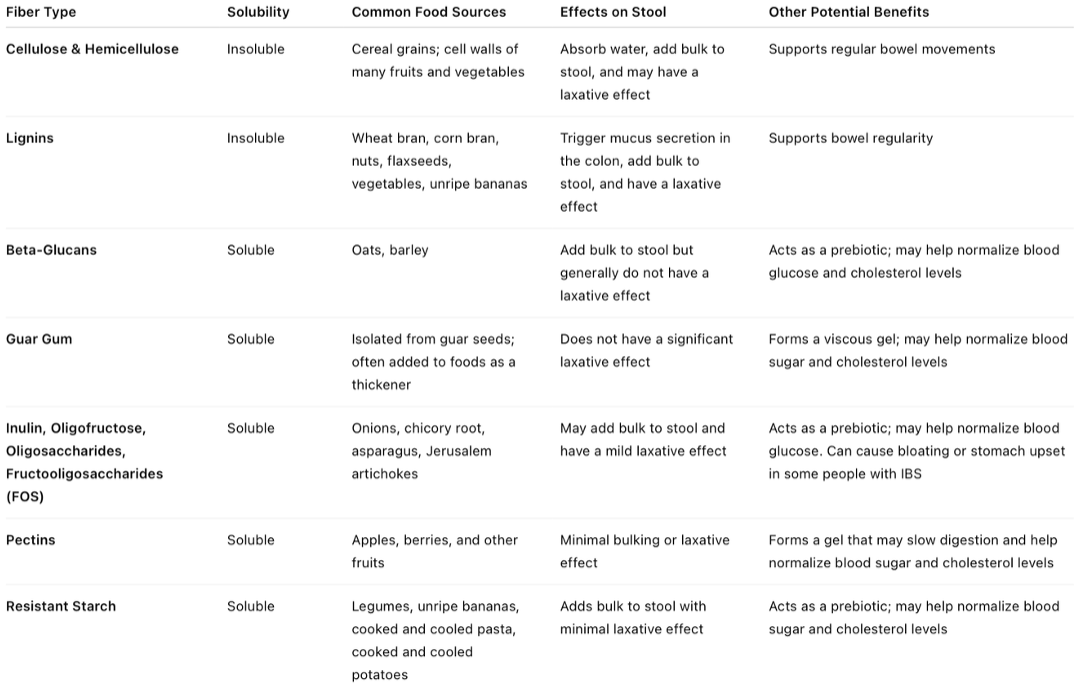
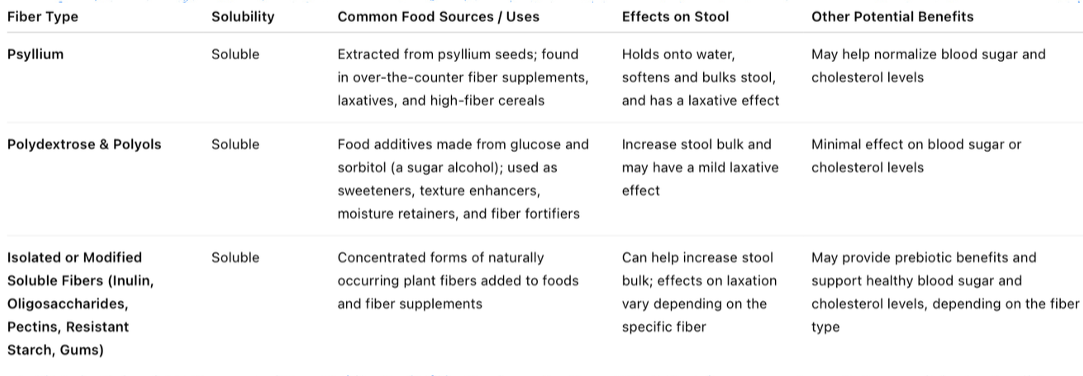
| Soluble fiber | Insoluble fiber |
|---|---|
| Dissolves in water and forms a gel, which helps lower glucose levels and cholesterol. | Does not dissolve in water, which helps food move through your digestive system, promoting regularity. |
How to get more fiber
- Do not hyperfocus on a particular type of fiber. Each one offers some level of health benefit.
- Eat a wide variety of plant foods. Focus on fruits, vegetables, whole grains, legumes, nuts and seeds to reach your fiber goal.
- Start slow. Adding too much fiber too quickly can result in gas, diarrhea, cramping and bloating. Consider increasing your fiber intake gradually over a few weeks.
- Drink fluids. As you eat more fiber, remember to drink plenty of fluids to prevent constipation.
- Check the label. When buying packaged foods, check the Nutrition Facts label for fiber content.
High Fiber Foods
| Category | Food | Serving Size | Fiber (g) |
|---|---|---|---|
| Nuts & Seeds | |||
| Chia seeds | 2 Tbsp | 10.0 | |
| Pumpkin seeds | ¼ cup | 5.2 | |
| Ground flaxseed | 2 Tbsp | 4.0 | |
| Almonds | 1 oz (23 nuts) | 3.5 | |
| Pistachios | 1 oz (49 nuts) | 3.0 | |
| Sunflower seeds | ¼ cup | 3.0 | |
| Hazelnuts | 1 oz | 2.8 | |
| Pecans | 1 oz | 2.7 | |
| Peanuts | 1 oz | 2.4 | |
| Walnuts | 1 oz | 2.0 | |
| Legumes | |||
| Navy beans | 1 cup cooked | 19.0 | |
| Split peas | 1 cup cooked | 16.3 | |
| Lentils | 1 cup cooked | 15.6 | |
| Black beans | 1 cup cooked | 15.0 | |
| Kidney beans | 1 cup cooked | 13.6 | |
| Lima beans | 1 cup cooked | 13.2 | |
| Chickpeas | 1 cup cooked | 12.5 | |
| Pinto beans | 1 cup cooked | 12.2 | |
| Green peas | 1 cup cooked | 8.8 | |
| Edamame | 1 cup cooked | 8.0 | |
| Grains | |||
| All-Bran Original cereal | ⅔ cup | 17.0 | |
| Wheat bran | ¼ cup | 12.5 | |
| Bulgur | 1 cup cooked | 8.2 | |
| Whole wheat pasta | 1 cup cooked | 6.3 | |
| Barley | 1 cup cooked | 6.0 | |
| Shredded wheat | 2 biscuits | 6.0 | |
| Quinoa | 1 cup cooked | 5.2 | |
| Oatmeal | 1 cup cooked | 4.0 | |
| Popcorn (air-popped) | 3 cups | 3.6 | |
| Brown rice | 1 cup cooked | 3.5 | |
| Vegetables | |||
| Acorn squash | 1 cup cooked | 9.0 | |
| Artichoke | 1 medium | 6.9 | |
| Brussels sprouts | 1 cup cooked | 6.4 | |
| Collard greens | 1 cup cooked | 5.6 | |
| Broccoli | 1 cup cooked | 5.1 | |
| Sweet potato (with skin) | 1 medium | 4.8 | |
| Kale | 1 cup cooked | 4.7 | |
| Spinach | 1 cup cooked | 4.3 | |
| Cauliflower | 1 cup cooked | 3.8 | |
| Carrots | 1 cup raw | 3.6 | |
| Fruit | |||
| Raspberries | 1 cup | 8.0 | |
| Blackberries | 1 cup | 7.6 | |
| Pomegranate arils | 1 cup | 7.0 | |
| Pear (with skin) | 1 medium | 5.5 | |
| Avocado | ½ medium | 5.0 | |
| Apple (with skin) | 1 medium | 4.8 | |
| Orange | 1 large | 4.4 | |
| Kiwi | 2 medium | 4.2 | |
| Banana | 1 medium | 3.1 | |
| Strawberries | 1 cup halves | 3.0 | |
Simple tips to get you started
- Eat whole fruits instead of drinking fruit juices.
- Replace white pasta and rice with whole-wheat or bean-based pasta, brown rice, quinoa and other whole grains like barley, millet, amaranth and farro.
- Choose grain-based products (cereal, bread, crackers, etc.) that have a whole grain as their first ingredient.
- Add high-fiber foods to current meals (e.g. add nuts or seeds to cereals or yogurt; add vegetables to casseroles, stir-fries or soups)
- Top whole grain toast with avocado instead of butter.
- Have a salad before dinner.
- Snack on raw vegetables, nuts or roasted chickpeas instead of chips and crackers.
- Substitute beans or legumes for meat two to three times a week.
Fiber supplements
- To the extent possible, consume fiber primarily through food. A
- fiber supplement may make sense if:
- You have trouble reaching your fiber goal through food alone
- You are trying to use soluble fiber to lower cholesterol
- You are trying to use a particular type of fiber to help manage constipation
- Over-the-counter fiber supplements come in capsules, chewable tablets and powders that are mixed with water. Common brands include Benefiber, Metamucil, Citrucel, and Konsyl.
- Always discuss a fiber supplement with your health care provider.